Showing posts with label Research. Show all posts
Showing posts with label Research. Show all posts
12 December 2011
Group Discussion - December 12th.

11 December 2011
Group's Individual Contribution to Planning.


10 December 2011
Scene Walkthrough Timeline.


I've done Scene Walkthrough Timeline. It is a timeline showing how long will each shot take and how long will the scene in the shot take. I also described every shot to help us along with filming when it comes to it.

09 December 2011
Moodboard.
I have created a moodboard using pictures found on internet and the website called Wordle.net. It was really hard to find appropriate pictures for the scene but I found all I could, that seemed appropriate enough. The moodboard helped me and the group see what our thriller must include, what mood it is set in and what kind of costumes/props/actors we will need as well as equipment in order to "tell the story in pictures".


Costume Design
Whilst Kieran is putting together actors for our thriller opening, I have taken over the costume design, thinking of each character and trying to represent it in its way by the costume they are wearing.

I came up with the costume ideas for our actors, which Kieran will choose as the casting crew. The criminal will have to wear black costume to symbolise the dark and mysterious character. Also, black gloves for symbolising his carefulness and clever mind. The husband will wear just a suit, with a shirt -a simple business wear - symbolising the simplicity and calm lifestyle and a suitcase - symbolising the hardwork of a businessman he does. His wife's costume is symbolising the stereotype of a housewife lifestyle with a girl by her side, suggesting she is a fulltime mum, looking after the child and waiting for his husband to come home and serve him dinner.
However, these are just pictures from the internet for the purpose of getting the ideas of the costumes. We might develop or modify those ideas.

I came up with the costume ideas for our actors, which Kieran will choose as the casting crew. The criminal will have to wear black costume to symbolise the dark and mysterious character. Also, black gloves for symbolising his carefulness and clever mind. The husband will wear just a suit, with a shirt -a simple business wear - symbolising the simplicity and calm lifestyle and a suitcase - symbolising the hardwork of a businessman he does. His wife's costume is symbolising the stereotype of a housewife lifestyle with a girl by her side, suggesting she is a fulltime mum, looking after the child and waiting for his husband to come home and serve him dinner.
However, these are just pictures from the internet for the purpose of getting the ideas of the costumes. We might develop or modify those ideas.
Animatic - Storyboard- Actual Shot length.
I have created the animatic for the storyboard that we have created (to be found on our group blog) with each shot being as long as it would be in the final clip.
Thriller Opening - Group Brainstorm

21 November 2011
9 Stills. Thrilller "Copycat" - voiceover + trailer.
I have watched this film to do further research into thriller genre and find out more relevant and impressing tricks and skills I could use
20 November 2011
Iconic Thriller Directors.

Research on Iconic Thriller Soundtracks & Sounds.
I have done a research, looking into Iconic thriller soundtracks and sounds. I have used website such as youtube, my own knowledge and notes and refrences for things such as names of directors - Wikipedia and IMDb. I have then uploaded the research onto the Windows Movie Maker and added the sounds in to make my work presentable in a creative style that would interest the potential reader.
25 word Treatment.
I have done a research on "Treatment". And created my own based on the idea for thriller presented in the brainstorm I've created earlier on.
04 November 2011


13 October 2011
Film Classifications Research - Movie.
I've done a research regarding film classifications according to BBFC - British Board of Film Classification. I visited their website: www.bbfc.co.uk and used the information on there to create my research. I then used a movie maker and sound recorder to present my research in a creative way. Please watch the video below to hear my general research on different film classifications and read the text below to see the uses of film classifications in thriller genres.
Usually thriller films are classified 12A upwards. It does depend on the content of the thriller to decide whether it would be 12A/12, 15 or 18 rated. For example, if the content is more gory, intense and heavily psychological, it would be rated 15. However, if it is more drama/action or fantasy themed thriller than it would be 12A classified - however it depends on other factors affecting the classification as well, such as use of language, imagery, etc. Another example is if the film was erotic/very gory/adult-focused then it would most likely to be classified as 18- appropriate.
29 September 2011
Editing - match on action/shot-reverse shot/180 degree rule, practice.
In today's lesson, I learned how to edit sequences so that I can create match on action sequences. In our groups of three, we also got a task of recreating a scene of Lock, Stock and Two Smoking Barrels, specifically the poker game scene. In our groups, we were meant to shoot a series of still shots that would create a match on action effect - in other words, the effect of continuity of the shot. I think it is also important to add that match on action effect did not come up in the original sequence, which was even more challenging for us as we needed to come up with our own idea for it. On the left there is the original sequence that we then had to recreate using match on action effect, (sequence starts at 1:54)
Whilst two other members of my group were selecting the 9 frames of the Poker Game sequence and rearranging them so that they would make sense in our own sequence, I was setting up the camera equipment. I set up a tripod, and rewinded the tape inside the camera. Then I needed to arrange the actors (members of my group) into appropriate positions for the scene and I started shooting the series of still shots. Then we had to edit the shots together, and cut the match on action shots together so that they made sense.
(the sequence will be added on when finished editing)
Whilst two other members of my group were selecting the 9 frames of the Poker Game sequence and rearranging them so that they would make sense in our own sequence, I was setting up the camera equipment. I set up a tripod, and rewinded the tape inside the camera. Then I needed to arrange the actors (members of my group) into appropriate positions for the scene and I started shooting the series of still shots. Then we had to edit the shots together, and cut the match on action shots together so that they made sense.
(the sequence will be added on when finished editing)
28 September 2011
The History of Thriller Genre (RESEARCH)
I have done quite a bit of research on the thriller genre. I looked at different films (the iconic ones, the famous ones and the less known ones) and their directors and I looked how it changed over the time. I found that the thriller genre started introducing different sub-genres with time, starting with psychological thrillers, crime thrillers, romantic thrillers all the way to action and horror thrillers. I looked at iconic directors and the famous movies they have made and how they influenced other directors into writing/directing their own. This research will help me and my group to decide on what theme/sub-genre to pick for our thriller opening sequence and maybe also, if we look at different directors and their particular films, we might find some techniques and ways to make the thriller opening more effective, therefore it would help us to create a better piece.

 Thriller genre was becoming quite popular at the beginning of 1920's to 1940's. Alfred Hitchcock was one of thee main directors that played a huge part in the development of the thriller genre. In 1929, the master of thriller, Alfred Hitchcock has directed and produced his first sound film called “Blackmail”. Another early but significant film of the 1930's this time was a German film based on the life of a serial killer Peter Kurten. Film was called simply “M” and was directed by Fritz Lang in 1931. It is easy to tell that Hitchcock was the major influence for the thriller genre to grow because the number of recognisable and famous films he directed such as: “The Man Who Knew Too Much” (1934), “The 39 Steps” (1935) which was his first romantic thriller “Rebecca” (1940), which was nominated for Oscar Awards, Saboteur (1942) and “Shadow of a Doubt” (1943) -based on a real life story of a serial killer from the 1920's Alfred Hitchcock first successful films, many other directors were inspired and influenced and created their own thriller such as: the psychological thriller “Gaslight” (1944) directed by George Cukor. As well as “The Spiral Staircase” by Robert Siodmak (1946) and “The Third Man” (1949) by Carol Reed (introducing the film noir).
 In 1950's, Hitchcock made some of his first and most famous films such as: “Strangers on the train” (1951), “Rear Window” (1954) and Vertigo (a psychological thriller (1958)). Hitchcock started the wave of new thrillers coming into the film industry: Henry Hathaway directed a film in 1953, called "Niagara" -which would fall under film noir sub-genre. Hitchcock made a film to become one of the most famous ones he ever made called: “Psycho” in 1960. That encouraged other directors to make films similar to that, also because it was released just after the erosion of Production Code in United States of America. Films such as: “Peeping Tom” (produced in the same year as Hitchock's “Psycho”, 1960) was a psychological thriller as well. Also that led Roman Polanski -a French-Polish director- to create a psychological thriller, and a first English-language film of his -called “Repulsion” (1965), which is described as “surrealistic” and “frightening”.
 In 1970's and 1980's more violent thrillers became popular amongst directors. Hitchcock was one of the first ones, again, to produce such film with the one called “Frenzy” in 1972, which was about a serial killer who raped and strangled women to death, based in London. As Hitchcock is known to be the master of the thriller genre, a lot of directors got highly influenced by him. One of those directors, was Brian De Palma, whose films significantly suggested Hitchcock's influence on him. One of the main influences was killing the main character in the film nearly from the start, rapidly changing points of views in the film and sequences to be described “dream-like”. De Palma often more or less smoothly reconstructed scenes from other films and his favourite themes were guilt, paranoia and obsession. Such as the psycho-thriller called “Sisters” from 1973, “Obsession” (1976), which is thought to be highly influenced by Hitchock's “Vertigo”. De Palma also made an erotic thriller called “Body Double” in 1984, which was telling a story of an actor who got involved in a lot of mystery and intrigue with his erotic, next-door “body double” neighbour.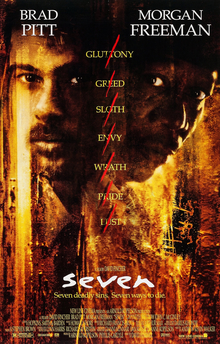
 Towards more recent times, many psychological thrillers gained the fame. The ones telling stories of people affected by obsession, mental illnesses, violence and revenge mostly. In 1990, Rob Reiner made a film based on a Stephen King's book. The film was called “Misery” (psychological thriller). Another very famous and very controversial film of 1990's was “The Silence of The Lambs”, which was a crime thrilled directed by Jonathan Demme. Another crime thriller -very popular as well – was “Se7en” (1995) by David Fincher.
 In the last decade, most thriller films still are influenced by other films from previous times, like the classics from Hitchcock or David Fincher. However, thriller film directors start to use aspects of other films such as horror, action or science-fiction (super-natural thriller sub-genre) in order to avoid repetition and lose their originality.



27 September 2011
9 Frame Analaysis -Catch Me If You Can
I have done my research on different movie openings. This opening title sequence comes from Catch Me If You Can film directed by Steven Spielberg in 2002. I have done a powerpoint presentation, which I then converted into a PDF file and uploaded on a website called: www.slideshare.net
(Please Click 'View Full Screen' for a better view)
26 September 2011
Research on Continuity.
I have done a research on shot/reverse-shot technique used in film, for the effect of continuity.
Shot /Reverse- Shot is used in films for the continuity effect. It is a film technique used usually in particular scenes, such as conversations where one character is looking at another and then that character is showing looking at the first one. Usually the other character that the first is looking at is off-screen and the first character is the main subject of the shot, and vice versa. This technique is usually used for the audience to perceive the continuos action that develops logically and chronologically. Over-the-shoulder shots are very often used in shot/reverse-shot editing as -shown above in the video I have found on Youtube. ^
Shot /Reverse- Shot is used in films for the continuity effect. It is a film technique used usually in particular scenes, such as conversations where one character is looking at another and then that character is showing looking at the first one. Usually the other character that the first is looking at is off-screen and the first character is the main subject of the shot, and vice versa. This technique is usually used for the audience to perceive the continuos action that develops logically and chronologically. Over-the-shoulder shots are very often used in shot/reverse-shot editing as -shown above in the video I have found on Youtube. ^
25 September 2011
Different Subgenres of Thrillers.
I have done a research regarding different sub-genres of thrillers. I looked at the most popular sub-genres of thrillers, researched their typical synopsises and looked at most siginificant films that could well represent each sub-genre. I also added theatrical posters created to promote the films to show, which films I am researching. Thriller genre is characterised by mystery and suspense. These are the two themes that are key ones to create a thriller movie. Thriller genre is broken down into many sub-genres that include the key following:
- conspiracy thrillers
- psychological thrillers
- erotic thrillers
- crime thrillers
- political thrillers.
Each thriller subgenre has its own characteristics that make it different from the others but all of them include mystery and suspense themes.

One of the sub-genres is conspiracy thriller. Its typical synopsis is usually about a character who has to face the evil on their own as it is only them who can see the wrong. A perfect example is the film by Oliver Stone called JFK. It was made in 1991. It is about the events that led to assassination of President John F. Kennedy being seen and examined by former New Orleans district attorney Jim Garrison.
 Another quite a popular sub-genre is psychological thriller. This sub-genre usually is usually telling stories about psychopathic or mentally unstable characters who come across a conflict or a situation they cannot resolve, which leads to confusion and wrong decisions being made, or conflicts being created in the character's mind. Some of the psychological thrillers are just taking place 'inside' character's mind, and some of them overlap with crime films and thrillers, where the criminal is psychopathic and their actions are usually investigated by the best psychologists and psychiatrists. Some of them are also based on real stories. However, some of the psychological films are quite 'heavy' for the viewer, and require a lot of thinking and some of them have to be watched couple of times before they are understood by the audience. A good example of a psychological thriller is ''Secret Window'' directed by David Koepp, based on a novel by Stephen King called 'Secret Window, Secret Garden'. It is a story about a successful author who goes through a mental breakdown when he finds out his wife had an affair. He lives away from people, on his own trying to write more. Throughout the film, we learn that he has a split-personality disorder and commits murder and other crimes for his own reasons, the ones only known to the 'other him'. Also another good example of psychological thrillers comes from Alfred Hitchcock such as: 'Strangers on a Train'.
  Another sub-genre of thriller films are erotic thrillers. Usual synopsis of the storyline includes the character being sexually or emotionally involved with other main character, which leads to uncomfortable situations and a lot of complications. A perfect example is the film called Basic Instinct, directed by Paul Verhoeven in 1992. The film is about a police detective who is investigating the murder of a rock star. During the investigation, the police detective gets involved emotionally and physically into a relationship with the prime suspect, which leads to events that complicate the smooth run of the investigation. The film met a lot of controversy before and after its release but finally became a great success.
  Other quite a popular sub-genre of the thriller are crime thrillers. Crime thrillers and psychological thrillers often make a good combination of sub-genres that usually turn out to be a great success as they create a lot of suspense, mystery and excitement, which captivates the audience. Crime thriller usually focus only on the criminal, not the investigators or police officers or victims. It is about the criminal, how he works, his calculated plans and plots in his mind – that is why psychological thrillers go really well together with crime thrillers. Also, the audience can watch the struggle from the victims that try to stop the criminal from the crimes he commits but usually it is useless and pointless as the calculated criminal usually wins it all. Usually crime thrillers are also packed with action, gun-shooting, car chasing and racing and others as the directors usually put action over the psychology in crime thrillers, however not always. Good examples of crime thrillers are Seven or Silence of the Lambs. Silence of the Lambs was directed by Jonathan Demme in 1991. The film is based on a novel by Thomas Harris that features Dr. Hannibal Lecter – an amazing psychiatrist and cannibalistic serial killer. The storyline features a FBI trainee who seeks advice from the imprisoned Dr. Hannibal Lecter, to help establish and catch another serial killer, known as 'Buffalo Bill'. Talking to Dr. Hannibal Lecter, who used to be a very good psychiatrist is meant to help the FBI to locate Buffalo Bill, by finding out how his mind works, how he works and figure out his plans, by having an insight into his mind with help of Dr. Hannibal Lecter, but it turns out it is not so easy, as Clarice Starling – the FBI trainee – first needs to gain the psychiatrist's confidence and trust. This is also a perfect example of crime thrillers and psychological ones being combined together. Another one of those combination could be Mindhunters, which is rather a new thriller but very psychologically and action based crime thriller.
 Another respected sub-genre of thrillers, is political thriller. Films of this thriller sub-genre is usually arguing against the political power struggles in particular country that the film is set in. Some political thriller also have some characteristics of other themes, such as: psychological or crime thrillers. They also sometimes refer to terrorist attacks, assassinations of political figures, such as: The Man Who Knew Too Much by Alfred Hitchcock, which originally was made in 1934 and remade in 1956.
 Moodboard.

I created a moodboard of pictures that would represent main themes of a thriller. I included iconography for different characteristics of sub-genres, as well such as: psychological thriller, political thriller, conspiracy thriller and crime thriller. Also, I included the themes of mystery and suspense that are key in order to make a successful thriller film. Silhouettes, magnifying glasses, inspectors, detectives, fingerprints, documents, mysterious figures, psychopaths, murders and victims was mostly what I was looking for and aimed to put into my blog in order to show the typical mood and themes of thrillers.
19 September 2011
Opening Titles - The Usual Suspects.
In a group of four, we watched the movie opening titles to a thriller film called The Unusual Suspects and we did our own analysis of it. We have looked at things such as how are the opening titles incorporated into the thriller opening and what genre elements are there. We also made notes on the information about the plot and characters that the movie opening gives away.
The movie opening titles of the film The Unsual Suspects was quite simple. There is not a lot of light and the whole introduction is kept at low light level, almost pitch black. There are different shades of light, such as blue and white and they are very repetetive. This might be the reflected light of perhaps a town or some kind of urban area alongside the water, which we thought it might have been a river. It all sets quite a slow and quite dark mood into the movie. The fonts used with the titles is also very simple. There is no special curves or bubble writing or linked fonts. It is just a simple font, in capital letters, telling the viewer the titles, main actors, the director and producers etc. The camera shot that is being used for the opening titles to create the moving effect of the river seems only as if the sequence of three or five different shades of light might have been photographed or filmed and just played on repeat, over and over again.
The main Genre elements that we have found in the film are: the music the directors have used, which is a classical piece of music, kept at very slow tempo to add dramatism to the opening. Also, the dark images of water and the simple fonts keep the viewer interested as they are wanting to find out what will happen next. It may also make the viewer wonder what would be the meaning of the water sequence set on loop mode and just played all over again, why the classical music playing so slow and everything is dark with a low level of light available. The lack of light in the opening titles also sets the mood of the thriller. We can tell by the darkness and simplicity of it, that the mood would be quite dark and mysterious and the music is only creating suspense for positive purposes for the audience as this is what thriller movies are about.
There is not much to say about the characters or the plot in this particular film my group and I have looked at, as there is no characters or plot being shown. It just leaves the audience to wonder and make their own assumptions of what the plot might be or what may happen throughout the movie.
The director might have used that approach however to interest the viewer and make them think and make their own assumptions of the action in the film, already, right from the start on purpose. Even though the thriller opening does seem as if it is very simple and it may seem that there is not much too it, there might have been a lot of brainstrorming and thinking-through the idea of the movie opening, to surprise the viewers, make them think and get them interested to find out what is going to happen in the film.
The movie opening titles of the film The Unsual Suspects was quite simple. There is not a lot of light and the whole introduction is kept at low light level, almost pitch black. There are different shades of light, such as blue and white and they are very repetetive. This might be the reflected light of perhaps a town or some kind of urban area alongside the water, which we thought it might have been a river. It all sets quite a slow and quite dark mood into the movie. The fonts used with the titles is also very simple. There is no special curves or bubble writing or linked fonts. It is just a simple font, in capital letters, telling the viewer the titles, main actors, the director and producers etc. The camera shot that is being used for the opening titles to create the moving effect of the river seems only as if the sequence of three or five different shades of light might have been photographed or filmed and just played on repeat, over and over again.
The main Genre elements that we have found in the film are: the music the directors have used, which is a classical piece of music, kept at very slow tempo to add dramatism to the opening. Also, the dark images of water and the simple fonts keep the viewer interested as they are wanting to find out what will happen next. It may also make the viewer wonder what would be the meaning of the water sequence set on loop mode and just played all over again, why the classical music playing so slow and everything is dark with a low level of light available. The lack of light in the opening titles also sets the mood of the thriller. We can tell by the darkness and simplicity of it, that the mood would be quite dark and mysterious and the music is only creating suspense for positive purposes for the audience as this is what thriller movies are about.
There is not much to say about the characters or the plot in this particular film my group and I have looked at, as there is no characters or plot being shown. It just leaves the audience to wonder and make their own assumptions of what the plot might be or what may happen throughout the movie.
The director might have used that approach however to interest the viewer and make them think and make their own assumptions of the action in the film, already, right from the start on purpose. Even though the thriller opening does seem as if it is very simple and it may seem that there is not much too it, there might have been a lot of brainstrorming and thinking-through the idea of the movie opening, to surprise the viewers, make them think and get them interested to find out what is going to happen in the film.
Subscribe to:
Posts (Atom)