We have done our preliminary task evaluation talking about our film and what went good or wrong. It can be found on HERE, which is our group's blog directing you to the post.
Showing posts with label Preliminary Task. Show all posts
Showing posts with label Preliminary Task. Show all posts
29 September 2011

Preliminary Task- Final Film.
We have completed our final video for the preliminary task: "Six ways to Kill your wife"!
Here are some screen shots of the final video which can be found on our group blog: HERE.


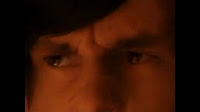

Here are some screen shots of the final video which can be found on our group blog: HERE.


28 September 2011
Preliminary Task - Synopsis.
During today's lesson we watched an interrogation scene from "The Dark Knight" film by Christopher Nolan. Then we were given our Preliminary Task for our groups of three people each. The preliminary task was to create an interrogation scene, presenting the techniques of film making we learned so far such as: different angles of shots, framing, composition and continuity (shot/reverse-shot, 180 degree rule, match on action), which is all going to help us create mystery and suspense of the sequence.
The title of the interrogation scene is "6 ways to kill your husband (or wife)". In this lesson I learned what linear and non-linear film meant. Non-linear is when the film jumps and cuts through different scenes or starts from the end of the story and goes back to the start. A linear film is when the events happen chronollogically and in order, and they are not mixed up or neither the story is presented "backwards" (from end to start). This information I will need when creating my final production in my group as I might use this information to decide what my opening sequence would have a better effect. I have also learned about two different effects: omniscient and restricted. Omniscient effect in a film is when something happens and the audience knows it. They see the action and they know exactly what is going on in the film. However , restricted is when something happens unexpectedely, when it is not clear to the audience what is about to happen/take place.
I also wrote a synopsis for "the film" that the scene would have come from:
"A young, super-intelligent female police-detective, Emily Jarvis, interrogates a genius psychiatrist, James Atkinson, who is suspected of killing his own wife. During many interrogations and interviews, James Atkinson is trying to trick the police detective's mind with clever questions and statements that make no sense at first but then suddenly it all falls into place, when Emily Jarvis does a particular research on the famous, genius psychiatrist. It turns out James Atkinson is not who he said he was. It appeared from the early documentation that James Atkinson used to be a completely another person before he started his research on mentally diseased people. Emily Jarvis tries to find out the truth but she finds herself being dragged into a dark past of the suspect, his wife, his -what it appears to be amnesia -and other aspects that make Emily Jarvis question her own existance and identity and state of mind.
So who is James Atkinson and who was the man before him? Why there appear to be two people of the same looks but different names? Is it amnesia that affected James Atkinson, or was it just denial? Will Emily Jarvis find out the truth? Or will just lose her mind just like James Atkinson?"
The title of the interrogation scene is "6 ways to kill your husband (or wife)". In this lesson I learned what linear and non-linear film meant. Non-linear is when the film jumps and cuts through different scenes or starts from the end of the story and goes back to the start. A linear film is when the events happen chronollogically and in order, and they are not mixed up or neither the story is presented "backwards" (from end to start). This information I will need when creating my final production in my group as I might use this information to decide what my opening sequence would have a better effect. I have also learned about two different effects: omniscient and restricted. Omniscient effect in a film is when something happens and the audience knows it. They see the action and they know exactly what is going on in the film. However , restricted is when something happens unexpectedely, when it is not clear to the audience what is about to happen/take place.
I also wrote a synopsis for "the film" that the scene would have come from:
"A young, super-intelligent female police-detective, Emily Jarvis, interrogates a genius psychiatrist, James Atkinson, who is suspected of killing his own wife. During many interrogations and interviews, James Atkinson is trying to trick the police detective's mind with clever questions and statements that make no sense at first but then suddenly it all falls into place, when Emily Jarvis does a particular research on the famous, genius psychiatrist. It turns out James Atkinson is not who he said he was. It appeared from the early documentation that James Atkinson used to be a completely another person before he started his research on mentally diseased people. Emily Jarvis tries to find out the truth but she finds herself being dragged into a dark past of the suspect, his wife, his -what it appears to be amnesia -and other aspects that make Emily Jarvis question her own existance and identity and state of mind.
So who is James Atkinson and who was the man before him? Why there appear to be two people of the same looks but different names? Is it amnesia that affected James Atkinson, or was it just denial? Will Emily Jarvis find out the truth? Or will just lose her mind just like James Atkinson?"
Preliminary Task - Research - Lighting
Film noir - low key lighting - expressive lighting :
Film Noir is always a black and white film. Quite
popular technique to be used in thriller films including investigations and
detectives. It is a great way to create mystery as you only shine the light on
things you want the audience to see and keep the rest in the dark. To create
that kind of light, intense focused hard light is needed. It should be focused
only on the parts of the character or room that the audience is supposed to see
to create that mysterious and suspicious feel. When creating a film in the Film
Noir style, the things that should be avoided are even lighting, greys and fill
light mostly focused hard light and low key lighting should be used only. Also,
very useful shots in film noirs are low angle shots or high angle shots. Also
the use of shadows is very useful as they create a lot of suspense and mystery.
Another very popular technique is to insert silhouettes in the film. Silhouettes
are achieved by putting the light behind the object – potential character –so
that their body is outlined but no details revealed –neither their face or what
they are wearing etc. Another popular technique for film noir is the use of
smoke –usually cigarette smoke. It helps to bring that aura of mystery into the
scene. Close-ups of faces to show emotions, using shadows and light.
26 September 2011
Research on Continuity.
I have done a research on shot/reverse-shot technique used in film, for the effect of continuity.
Shot /Reverse- Shot is used in films for the continuity effect. It is a film technique used usually in particular scenes, such as conversations where one character is looking at another and then that character is showing looking at the first one. Usually the other character that the first is looking at is off-screen and the first character is the main subject of the shot, and vice versa. This technique is usually used for the audience to perceive the continuos action that develops logically and chronologically. Over-the-shoulder shots are very often used in shot/reverse-shot editing as -shown above in the video I have found on Youtube. ^
Shot /Reverse- Shot is used in films for the continuity effect. It is a film technique used usually in particular scenes, such as conversations where one character is looking at another and then that character is showing looking at the first one. Usually the other character that the first is looking at is off-screen and the first character is the main subject of the shot, and vice versa. This technique is usually used for the audience to perceive the continuos action that develops logically and chronologically. Over-the-shoulder shots are very often used in shot/reverse-shot editing as -shown above in the video I have found on Youtube. ^
Subscribe to:
Posts (Atom)